FDP district councillors visited the facility in Ilvesheim
Ilvesheim. The “Istanbul Convention”, which also applies to Germany, has been in force for 12 years. The treaty is concerned with protecting women from domestic violence and with preventing violence. In line with its population, the Rhein-Neckar district ought to provide 56 places for people in need of protection. The chair of the FDP group in the Rhein-Neckar district council, Claudia Felden, had pointed this out at an early stage, because for a long time the district had been a “blank spot” when it came to women’s refuges. Yet already in the previous term of the district council (Kreistag), the Liberals’ years of persistent pressure showed initial success: a start had been made with the creation of individual protected spaces in the district, and at the beginning of 2024 the FDP group was also able to report that planning permission had been granted – exactly one year after the application was submitted – for 28 family units in the former Ilvesheim inn “Zur Rose”. The facility is run by the DRK (German Red Cross) district association Mannheim.
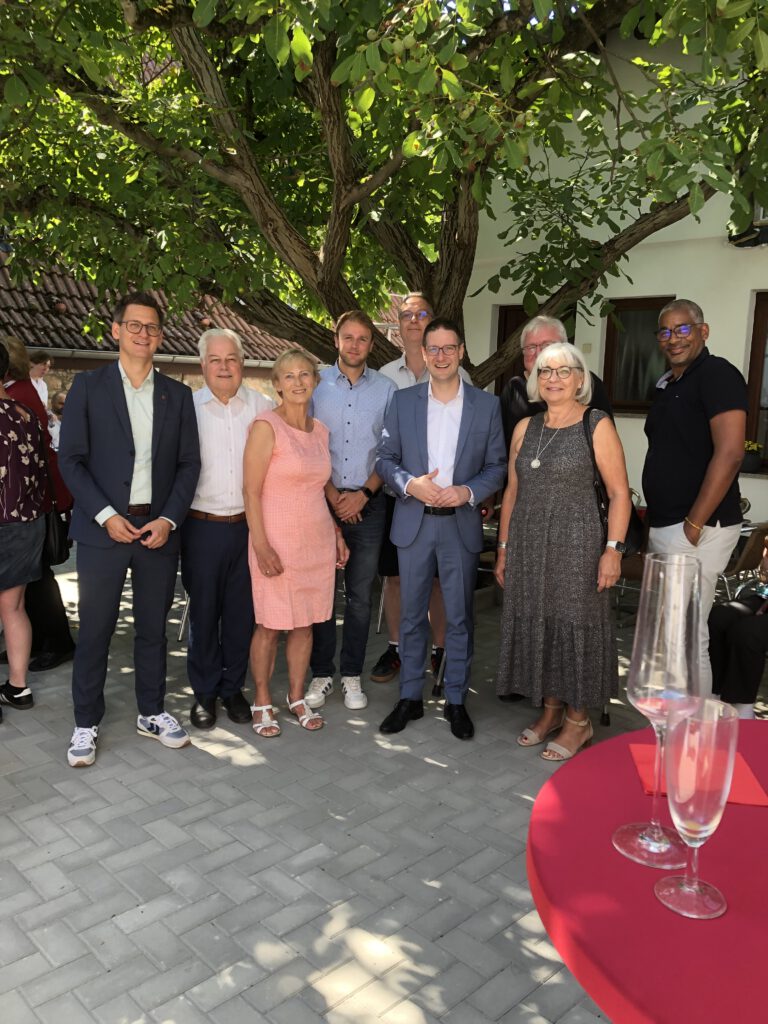
At the beginning of August 2026 – almost ready for occupancy – it was handed over for its intended purpose. Mayors, municipal and district councillors, led by District Administrator (Landrat) Manuel Just, were able to view the renovated and very attractively furnished premises and were impressed. It was the farewell project of the outgoing DRK district managing director Christiane Hammoudi and one of around 150 projects of the Hector-Stiftung Weinheim (Hector Foundation), which generously co-financed the meeting and protection centre. After more than three years of planning and implementation, an important gap in the range of social services in the Rhein-Neckar district has now been closed. It was not only the two FDP district councillors attending the opening, Bärbel Seemann and Dietrich Herold, who were satisfied. Above all, the combined concept of meeting place and protected space is convincing. Victims of violence are to be optimally protected, yet should not have to hide. A sealed-off wing ensures safety, while a publicly accessible section provides space for meeting, information and communication.
This autumn, once the remaining work has been completed, the “Rose” will go into operation. With this, the Rhein-Neckar district has taken a major step towards fulfilling the “Istanbul Convention”, the Liberals in the district council are pleased to note. And not only they: the municipality of Ilvesheim and the DRK, as the operator of the facility on behalf of the district, can also be glad of such a showcase project. For the public – such as clubs and organisations – is also to be able to use the meeting centre; as project manager Christiane Hammoudi said: “We want this building to remain a centre of the village.” SPD district councillor and mayor Thorsten Walter, who had pointed out the centuries-old roots of the “Rose” in Ilvesheim, was also very satisfied with the concept and design. Almost €5 million has been invested, the majority of which is being borne by the Hector Foundation, to which all the representatives expressed their particular thanks. Initially, four DRK staff members will work at the “Rose”. The District Administrator’s wish that a women’s protection centre might one distant day become unnecessary for lack of violence is, however, likely to remain rather illusory. Rather, the aim is to reach the district-wide figure of 56 protection places, which has still not been achieved. The FDP group in the district council will continue to campaign for this.