20,000 members support the life-saving and life-sustaining work of the Red Cross
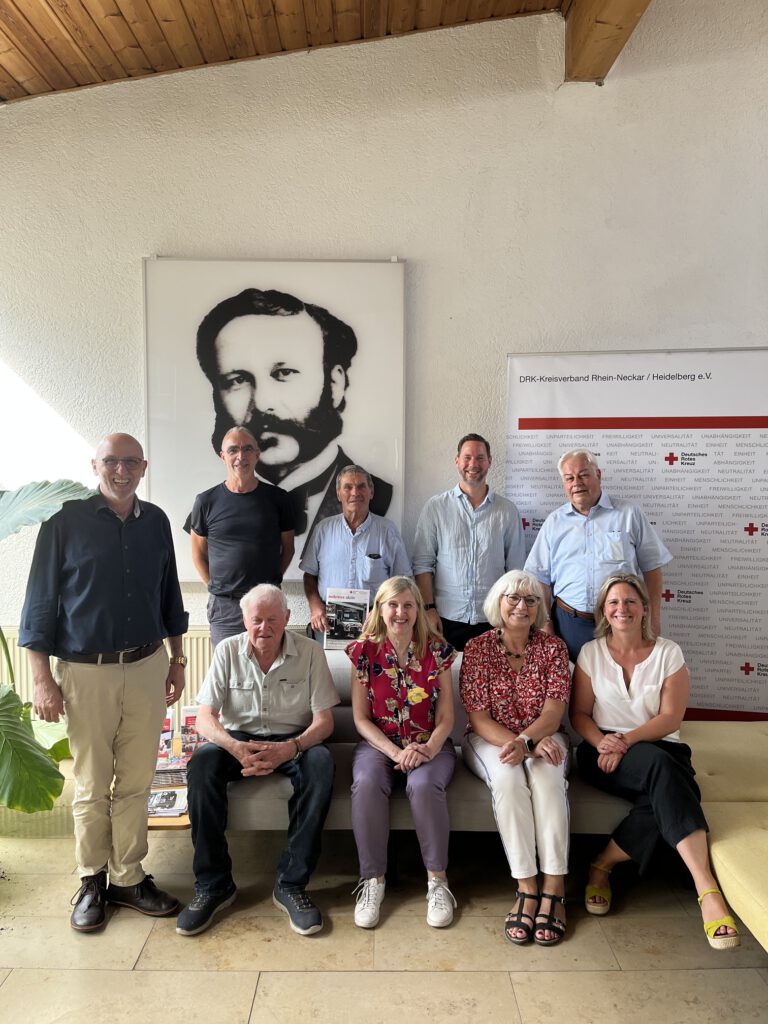
The “chemistry” was right from the start when the FDP group in the Rhein-Neckar district council visited the district office of the DRK (German Red Cross) district association in Heidelberg. Both sides had a lot to say to each other, and the Liberals had plenty of questions. The planned one-hour meeting turned into almost two – and everyone agreed unanimously that not too much time should pass before the next visit.
The district council group with its chair Claudia Felden, together with the Heidelberg FDP district chair Thomas Emmerich and Bahnstadt district advisory board member Sebastian Derkau, were welcomed by DRK President Jürgen Wiesbeck and district managing director Caroline Falk. First, the two explained the geographical remit, structure and tasks of the district association, which covers the city of Heidelberg and most of the Rhein-Neckar district (except the north and south-west, for which the DRK district association Mannheim is responsible). 460,000 people live in the association’s area. In 41 local branches there are more than 2,000 active volunteers and 321 full-time staff, who handle more than 50,000 call-outs a year. Several thousand customers use the DRK’s home emergency call service. Around 20,000 members support the life-saving and life-sustaining work of the Red Cross, whose tasks are so complex that it was not possible to go into them in detail during the on-site visit.
The focus was therefore placed on the topic “Future new building”. It quickly became clear to the Liberals that a new rescue centre has long been needed. With infrastructure dating from the 1950s and 1970s, present-day tasks can only be managed with great difficulty, and future tasks certainly can no longer be handled in terms of quality and quantity. Initial considerations for the new rescue centre began 20 years ago, according to Jürgen Wiesbeck. Planning has now progressed so far that 2029 can be named as the completion date. On a former NATO site on Rudolf-Diesel-Straße, optimal operational readiness can be achieved. The previous capacity will be tripled. This will leave the DRK in the Rhein-Neckar district and in Heidelberg well equipped for the future – also with regard to civil protection in disasters of all kinds, which is becoming ever more necessary. The FDP elected representatives from Heidelberg and the Rhein-Neckar district expressed their thanks for the comprehensive and valuable information and the lively discussion. Claudia Felden pledged that her group would continue to support the work of the DRK at district level within the scope of the available possibilities.