Free Democrats have the impact of higher parental contributions reviewed
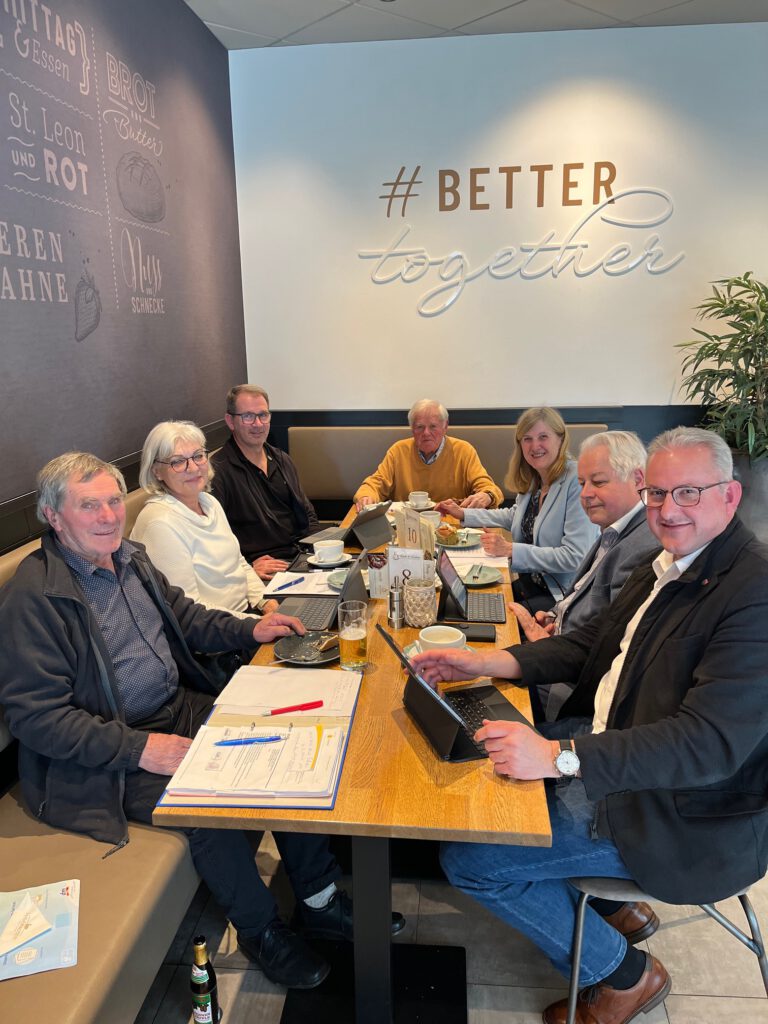
Ahead of the meeting of the youth welfare committee, the FDP Rhein-Neckar district council group dealt not only with all-day care and early intervention, youth welfare services in criminal proceedings and payments for the maintenance of children in full-time foster care, to name but a few, but also with the future of childminding.
Childminding (Kindertagespflege), that is, the care of young children by childminders, is an important building block in the care of young children, especially those under three.
In the Rhein-Neckar district, parental contributions were raised at rather short notice by around 60% in January 2025, after a ten-year pause (from 1.82 euros to 2.87 euros for the first child), which caused considerable irritation among both childminders and the parents concerned. When the district council (Kreistag) took that decision, it was assumed that a cost increase after such a long time was unavoidable and would remain stable for a longer period.
Just one year later, in December 2025, the district council, with a majority of the CDU, Freie Wähler and SPD, decided to change the basis for calculating parental contributions and to raise the contributions in 2026 and 2027.
Now, following the recommendations of the municipal associations and the churches, the costs of crèche places in day-care centres are used as the basis. As a result, the parental contribution will rise in two stages from the current 2.87 euros per hour to 3.60 euros in September 2027.
The FDP group was unable to approve this proposal, as childminding differs significantly from day-care centres in many respects, in terms of its target group as well as its organisation and cost structure. In addition, day-care centres run by local authorities are often subsidised by the municipalities, so that parents pay considerably less than the proposed “reference value” for their contribution, which is therefore by no means binding.
In the view of the Free Democrats, there is now a danger that this form of early childcare will decline or disappear in the long term in view of the sharp rise in costs. With birth rates continuing to fall, this sends a disastrous signal to women whose wish to have children conflicts with their career prospects.
In order to evaluate the impact of these cost increases from 2024 to autumn 2026, the youth welfare office has been asked to provide various key figures concerning childminders for this period, e.g. the number of childminders, the number of children cared for, the number of training courses for childminders, the number of hardship applications, etc.
This survey is intended to provide a meaningful, transparent database with which the situation of childminding in the Rhein-Neckar district can be monitored and assessed over a longer period.
For the FDP district council group, the compatibility of family and work is of great importance, both to enable mothers to return to work early and to provide qualified care and early childhood education. Alongside day-care centres, childminding has established itself as a flexible, important and necessary complement in this area. It must be preserved.