Information on the current client structure and its development
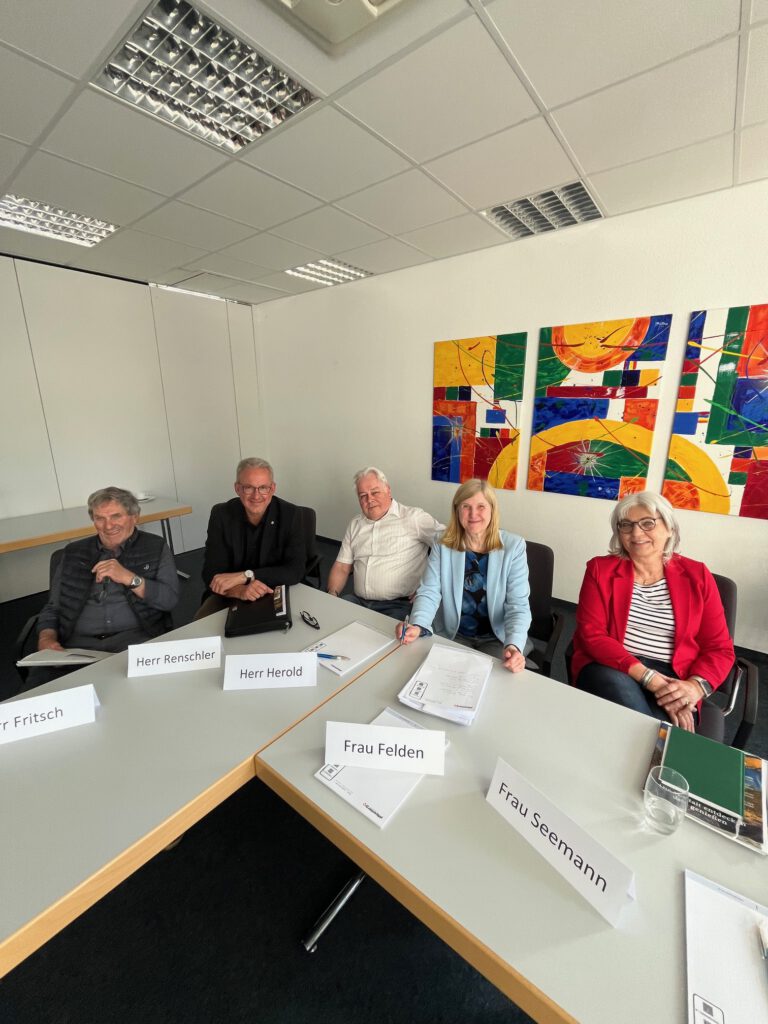
On-site visits have a long tradition in the FDP district council group, because difficult decisions can be made better and more easily on the basis of first-hand information than those made “on paper”. Recently, the Liberals in the district council were once again guests at the Jobcenter of the Rhein-Neckar district (job centre), where they were welcomed by managing director Janina Jung, her deputy Johannes Seiler, head of finance Lutz Westermann and Stephan Eberhardt, senior specialist at the Jobcenter. They explained the current client structure and its development as well as the associated challenges.
The previous record of 18,000 clients (April 2006) was clearly exceeded in February 2025. Three years earlier, the figure had been just under 14,800. The number of benefit households (Bedarfsgemeinschaften) in the Rhein-Neckar district rose from 11,447 (Nov. 2019) to 12,928 five years later. Administrative costs have also risen. In recent years, these and inflation-related cost increases were not taken into account in the Jobcenters’ budgets, forcing many – especially smaller – Jobcenters to reallocate funds from the integration budget in order to cope with the increased expenditure on an unchanged budget. In Jobcenters run as joint institutions of the Federal Employment Agency and the district, around 80% of administrative costs are staff costs. Around 90% of Jobcenter staff currently work in integration (40%), benefit administration (39%) or reception (7%), i.e. in direct contact with clients. The remaining 14% are accounted for by management and organisational tasks.
The FDP district councillors were pleased to note that the funds allocated to the Jobcenter of the Rhein-Neckar district are sufficient. The client structure is difficult: almost two thirds have no completed vocational training, around a third have health restrictions, around 60% are long-term clients, 20% each need to acquire or improve their German or are aged 55+. 17% have no school-leaving qualification and 14% are single parents. In most cases, several of these factors and further difficulties come together. All this requires a high level of motivation and qualification in client support, which, it was noted appreciatively, is present according to the impression of the FDP district councillors and also based on the trend figures. Digitalisation is also intended to free up capacity in this area for even more qualified advice. The Jobcenter’s service promise is ambitious: the website provides all information on how clients can access services. Appointments are available within 5 days. Waiting times are being reduced. Emergencies can be raised without an appointment during opening hours. After the Jobcenter experts had answered numerous questions from the group members, group leader Claudia Felden thanked them for the valuable advice and information. The FDP district council group will continue to maintain close contact with the Jobcenter of the Rhein-Neckar district.